
Every day, millions of Christians pass betmgm advertisements, receive invitations to office betting pools, or drive past casinos wondering: does my faith have something to say about this? The answer isn’t as simple as a yes or no, and that’s actually okay. Our faith journey often leads us through complex questions where Scripture, tradition, and personal discernment intersect in meaningful ways.
Gambling exists in a unique space within Christian ethics. Unlike issues where biblical teaching speaks directly and clearly, gambling occupies territory where thoughtful believers can arrive at different conclusions while maintaining genuine faithfulness. Some Christians see recreational betting as morally neutral entertainment, similar to buying a movie ticket. Others recognize serious concerns about stewardship, contentment, and the vulnerability of those struggling with addiction. Both perspectives emerge from sincere engagement with faith.
What matters most isn’t winning theological debates about gambling, but how we journey together through these questions. The Christian community shines brightest when we create spaces where people can wrestle honestly with difficult decisions, share stories without fear of judgment, and extend compassion toward those whose choices differ from our own.
This conversation touches real lives. Perhaps you’re questioning your own habits, supporting a loved one facing gambling addiction, or simply trying to understand what Scripture offers on this contemporary issue. Whatever brought you here, you’re part of a larger community seeking wisdom about how ancient faith speaks to modern challenges. Together, we’ll explore biblical principles, examine diverse Christian viewpoints, and discover practical ways to navigate these decisions with integrity, grace, and mutual support.
Why This Conversation Matters Now

The Changing Landscape of Gambling Access
The world of gambling has transformed dramatically in recent years, creating new challenges and questions for people of faith. What once required a trip to a physical casino or betting parlor now fits in our pockets through smartphones and tablets. Online sports betting platforms and casino apps have made gambling available 24/7, just a few taps away.
This shift accelerated following a 2018 Supreme Court decision that allowed states to legalize sports betting. Today, millions of Americans can place bets on their favorite teams from their living rooms or even during church coffee hour. Major sports leagues have embraced betting partnerships, and commercials promoting gambling apps air during family viewing hours.
For many in our Christian communities, this increased accessibility raises important considerations. Parents worry about their teenagers’ exposure to gambling content. Young adults navigate constant social media ads promising easy wins. Even those who’ve never set foot in a casino now face daily invitations to try their luck.
This changing landscape affects us all differently, and it’s worth exploring together how our faith speaks to these modern realities with grace and wisdom.
Real Questions from Real Believers
During a Tuesday evening small group, Marcus shared how his brother kept inviting him to fantasy football leagues with money pools. “I want to connect with him, but is this crossing a line?” he asked, genuinely torn between relationship and conviction.
At a women’s Bible study, Jennifer confessed her weekend casino trips had grown from occasional entertainment to weekly escapes. “I don’t think I have a problem,” she said quietly, “but I’m spending grocery money on slot machines and lying to my husband about it.”
Pastor David remembers counseling a young couple whose wedding fund disappeared through sports betting apps. “They came in heartbroken, asking if God could forgive them and help them start over.”
These stories reflect the real struggles happening in our communities today. Some believers wonder if buying a lottery ticket for fun differs from regular casino visits. Others question whether their March Madness bracket violates biblical principles about stewardship.
What makes these conversations so valuable is their honesty. When we create safe spaces where people can share without fear of judgment, we discover we’re not alone in our questions. These authentic dialogues help us grow together, supporting one another through discernment while extending grace for different convictions and circumstances.

Biblical Wisdom on Stewardship and Contentment
What Scripture Says About Our Resources
Scripture offers us a beautiful framework for understanding our relationship with money and possessions. Rather than viewing what we have as solely ours, the biblical perspective invites us to see ourselves as caretakers of gifts entrusted to us by God. This concept of stewardship runs throughout both the Old and New Testaments, reminding us that everything ultimately belongs to the Creator.
In the parable of the talents, Jesus tells the story of servants given different amounts of money to manage while their master is away. The message isn’t about accumulating wealth, but about using what we’ve been given responsibly and purposefully. When we apply this to decisions about gambling, we’re prompted to ask ourselves: How does this choice honor the trust placed in me? Am I managing these resources in ways that reflect my values and support my community?
The apostle Paul reminds us in 1 Corinthians that while many things may be permissible, not everything is beneficial. This wisdom applies to how we handle our finances. Wise stewardship means considering not just whether we can afford something, but whether it aligns with our calling to care for ourselves, our families, and our neighbors.
Many have found that reflecting on scripture’s teaching about contentment, generosity, and intentional living helps clarify their approach to entertainment spending, including casinos and sports betting. It’s about discernment rather than rigid rules, recognizing that our financial choices have spiritual dimensions worth thoughtful consideration.
The Heart Behind Our Choices
When we think about casinos and sports betting, the question isn’t just whether these activities are right or wrong in themselves. The deeper question is: what’s happening in our hearts when we participate?
Scripture invites us to examine our motivations with honesty and grace. In 1 Timothy 6:10, we’re reminded that “the love of money is a root of all kinds of evil.” Notice it doesn’t say money itself is the problem, but rather our relationship with it. Are we seeking security in a jackpot rather than in God’s provision? Are we chasing the rush of winning to fill a void that only spiritual wholeness can satisfy?
I remember talking with Marcus, a friend from our community group, who shared how his occasional sports betting had gradually become something he thought about constantly. He wasn’t losing his house or facing financial ruin, but he noticed his heart had shifted. The contentment he once felt had been replaced by a restless hunger for the next win. His story resonates with Proverbs 28:22, which warns that “the stingy are eager to get rich and are unaware that poverty awaits them.” The promise of quick wealth often blinds us to what we’re actually losing.
The beautiful thing about our faith is that it offers something better than the anxiety of gambling: the peace of knowing we’re already provided for. Hebrews 13:5 encourages us to “keep your lives free from the love of money and be content with what you have.” This isn’t about restriction but about freedom from the exhausting cycle of always wanting more.
Whatever decisions we make about casinos or betting, let’s start by honestly examining what’s driving those choices and extending that same compassionate reflection to others in our community.
The Ripple Effect: How Gambling Impacts Communities
Stories of Struggle and Hope
Behind every statistic about gambling addiction is a real person, a real family, and a real story of struggle. Meet Sarah, a church volunteer who found herself secretly placing sports bets on her phone, initially for fun but gradually losing control of her spending. Her story mirrors countless others in our communities who’ve felt the weight of shame and isolation, afraid to reach out for help.
But Sarah’s story didn’t end there. When she finally confided in her small group, she discovered she wasn’t alone. Another member had walked a similar path and connected her with a Christian recovery program. Today, Sarah mentors others facing gambling challenges, transforming her pain into purpose.
Then there’s the Martinez family, whose community rallied around them after learning about their father’s gambling debts. Rather than judgment, they received groceries, financial counseling, and prayer support. This compassionate response became a model for their entire church.
These stories remind us that healing happens in community. Across the country, churches and faith-based organizations are creating safe spaces for honest conversations about gambling. Some congregations have partnered with recovery groups, while others offer financial literacy classes that address gambling’s impact.
Recovery isn’t always linear, but it’s always possible. When we approach those struggling with gambling through the lens of compassion rather than condemnation, we create pathways for transformation. These stories of hope show us that no one needs to walk this journey alone.
Our Call to Care for the Vulnerable
When we look at the gambling industry through the lens of our faith, we’re called to consider not just our own choices, but how these businesses impact our neighbors—especially those most at risk. The statistics tell sobering stories: families stretched beyond their means, individuals battling addiction, communities with limited resources targeted by aggressive marketing.
I’ve heard from pastors who’ve walked alongside congregants struggling with gambling debt, watching as marriages strained and children went without. These aren’t abstract concerns—they’re real people in our pews, our neighborhoods, our families. Our Christian tradition has always emphasized standing with the vulnerable, and this issue demands that same compassion.
Consider Maria, a church member who shared how sports betting apps made gambling feel harmless and fun, until she’d lost thousands. Her recovery came through a small group that offered accountability without shame, reminding her of God’s grace while helping her find practical support.
This perspective isn’t about condemning individual choices or judging those who occasionally place bets. Rather, it’s about asking bigger questions: How do these industries affect communities already facing economic hardship? Are we paying attention to those caught in cycles of addiction? What does it mean to love our neighbor when we see systems that profit from human vulnerability?
Our faith invites us to advocate for stronger protections, support recovery resources, and create communities where people find belonging and hope instead of false promises of quick wealth.

Different Voices Within the Faith Community
Where Christians Find Common Ground
Despite the varied approaches Christians take toward casinos and sports betting, there’s remarkable unity in what matters most. Across denominations and perspectives, believers share deep concern for protecting vulnerable individuals from addiction and financial harm. Whether someone views gambling as inherently problematic or as a matter of personal freedom, nearly all agree that exploiting people through predatory practices contradicts the heart of Christian love.
Christians also find common ground in prioritizing community wellbeing over individual gain. Just as we’ve seen in other areas of a Christian community’s journey through complex issues, the emphasis remains on caring for one another. This means creating spaces where people can openly discuss struggles with gambling without fear of judgment.
The shared values of stewardship, compassion, and accountability unite Christians even when they disagree on specific rules. Rather than focusing on drawing lines, many congregations are discovering that walking alongside those facing difficult choices builds stronger faith communities. This unity in loving our neighbors well, while respecting different convictions, reflects the inclusive spirit Jesus modeled throughout his ministry.
Room for Thoughtful Disagreement
Within our Christian community, we find faithful believers who approach gambling with different convictions, and that’s okay. Some Christians view occasional betting on sports or visiting casinos as morally neutral recreational activities when done responsibly with discretionary funds. They point to Scripture’s emphasis on freedom in Christ and believe these activities become problematic only when they lead to addiction or financial harm.
Others arrive at different conclusions based on their reading of stewardship principles or concerns about supporting industries they view as exploitative. Both groups love Jesus and seek to honor Him, yet they navigate this issue differently, much like believers approach various faith and wellness choices with different perspectives.
I’ve watched church communities handle this beautifully when they prioritize relationship over being right. Pastor Michael’s congregation includes members who enjoy fantasy football leagues alongside those who avoid all gambling. Rather than creating division, they’ve fostered conversations where people share their reasoning with humility and curiosity. They’ve discovered that maintaining unity doesn’t require uniformity on every issue.
What matters most is that we extend grace to one another, recognize that sincere Christians can disagree, and focus on supporting each other’s spiritual growth. Whether you choose participation or abstinence, your decision deserves respect when made prayerfully and thoughtfully. Our diversity in perspective can strengthen rather than divide us when we lead with love and understanding.
Questions for Personal Reflection and Community Dialogue
Examining Our Own Hearts
Before we consider how our faith speaks to others’ choices around gambling, we’re invited to look inward with honesty and grace. This isn’t about shame, but about growing in self-awareness and freedom.
Ask yourself: What draws me to casinos or sports betting? Am I seeking entertainment, escape, or something deeper? Sometimes what feels like harmless fun can actually point to unmet needs—for excitement, community, or relief from stress. There’s no judgment here; we all seek comfort in different ways.
Consider your stewardship: Am I managing the resources entrusted to me in ways that honor my values and support my family’s wellbeing? One father shared how tracking his betting revealed he was spending what could have been family vacation money. His honest reflection led to meaningful change, not through condemnation but through clarity.
Finally, reflect on your vulnerability: Do I have control over this activity, or does it sometimes feel like it has control over me? If gambling ever feels compulsive or if you’ve noticed it affecting your relationships, finances, or peace of mind, that’s important information. Many communities offer support without judgment—reaching out is a sign of wisdom, not weakness.
Whatever your answers, remember you’re not walking this path alone.
Conversations to Have Together
These questions can open meaningful dialogue in your small group, family devotions, or coffee conversations with friends navigating this topic:
Start by sharing stories: Has anyone in our circle been personally affected by gambling—positively or negatively? What did those experiences teach us about community support and compassion?
Explore motivations together: What draws people to casinos or sports betting? Is it entertainment, the thrill, financial hope, or social connection? How might understanding these desires help us respond with grace rather than judgment?
Discuss boundaries: How do we distinguish between recreational entertainment and potentially harmful habits? What wisdom can we offer each other about setting healthy limits?
Consider community impact: How does gambling affect families and neighborhoods in our area? Are there local organizations addressing gambling addiction that we could support or partner with?
Reflect on alternatives: What life-giving activities might meet the same needs for excitement, community, or stress relief that gambling promises?
Practice listening: How can our faith community become a safer space for people struggling with gambling to share their stories without fear of shame? What would supportive accountability look like?
Remember, these conversations work best when we approach them with humility, recognizing we’re all learning together about living faithfully in complex situations.
Supporting Those Who Struggle
Creating Safe Spaces for Honesty
Churches have a unique opportunity to become havens where people can share their struggles with gambling without fear of condemnation. This starts with leadership modeling vulnerability from the pulpit, sharing stories of struggle and redemption that normalize honest conversations about difficult topics. When pastors and church leaders openly discuss challenges, it creates permission for others to do the same.
Small groups and ministry teams can establish ground rules that emphasize confidentiality and compassion over criticism. Consider designating specific support groups where members can discuss financial struggles, addictive behaviors, or moral questions in a confidential setting. These spaces work best when facilitated by trained listeners who understand that building community means meeting people where they are.
Training volunteers to respond with curiosity rather than judgment transforms church culture. Instead of immediate advice-giving, encourage questions like “What’s been on your heart?” or “How can we support you?” Some congregations have found success partnering with counseling services or addiction recovery programs, creating bridges between spiritual guidance and professional help. Remember, people are more likely to share when they see others being received with grace rather than shame.
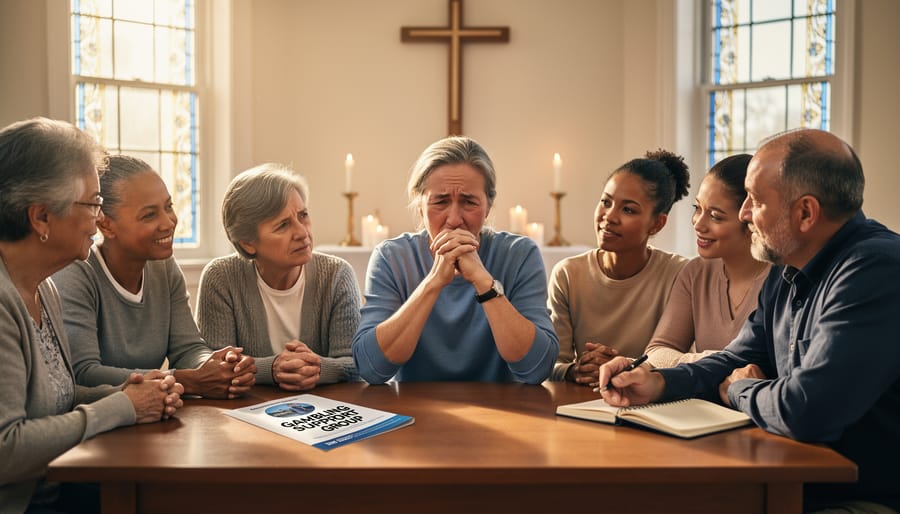
Connecting with Resources and Recovery
If you or someone you love is struggling with gambling, you’re not alone, and there’s hope for healing. Churches can be powerful sources of connection to recovery resources. Many faith communities partner with organizations like Gamblers Anonymous, which offers peer support groups where people share their journeys without judgment. Some churches host their own recovery groups specifically for gambling addiction, creating safe spaces where faith and recovery walk hand in hand.
Consider reaching out to Christian counselors who understand both addiction and spiritual struggles. Many denominations offer pastoral counseling services, and numerous communities have faith-based treatment centers that integrate biblical principles with evidence-based recovery methods.
Your church can also connect members with financial counseling to address debt resulting from gambling, helping rebuild stability alongside spiritual restoration. Recovery isn’t a solitary journey. One church in Texas started a support circle that meets weekly, where members pray together, share meals, and hold each other accountable with compassion. These connections transform lives.
Remember, seeking help is a sign of courage, not weakness. God’s grace meets us wherever we are, and recovery communities embody that grace through practical support and genuine companionship on the road to healing.
As we navigate questions around casinos and sports betting, we discover something beautiful: these conversations aren’t obstacles to our faith journey but invitations to grow together. When we gather to discuss challenging topics like gambling, we create space for honest dialogue that strengthens our spiritual communities and deepens our understanding of what it means to follow Christ in everyday decisions.
The path forward isn’t about having all the answers or agreeing on every detail. Instead, it’s about walking alongside one another with compassion and grace. Some in our communities may struggle with gambling addictions, others may enjoy occasional entertainment without harm, and still others may feel called to avoid these activities entirely. Each perspective deserves to be heard and honored as we practice faithful stewardship of our resources, relationships, and witness.
These discussions naturally lead to stronger community connections as we learn to hold space for different experiences and convictions. We grow when we listen to the single parent weighing lottery tickets against grocery bills, the young adult navigating fantasy sports leagues with friends, or the recovering addict finding healing through supportive community. Their stories shape our collective wisdom.
Moving forward, let’s embrace these conversations as opportunities to practice both truth and grace. We can uphold biblical principles while extending compassion to those whose journeys look different from our own. We can ask hard questions while creating safe spaces for vulnerability. We can hold firm convictions while remaining open to learning from one another.
Together, we’re not just talking about gambling; we’re building communities where people feel safe to wrestle with real-life challenges, where faith becomes practical and applicable, and where everyone belongs.